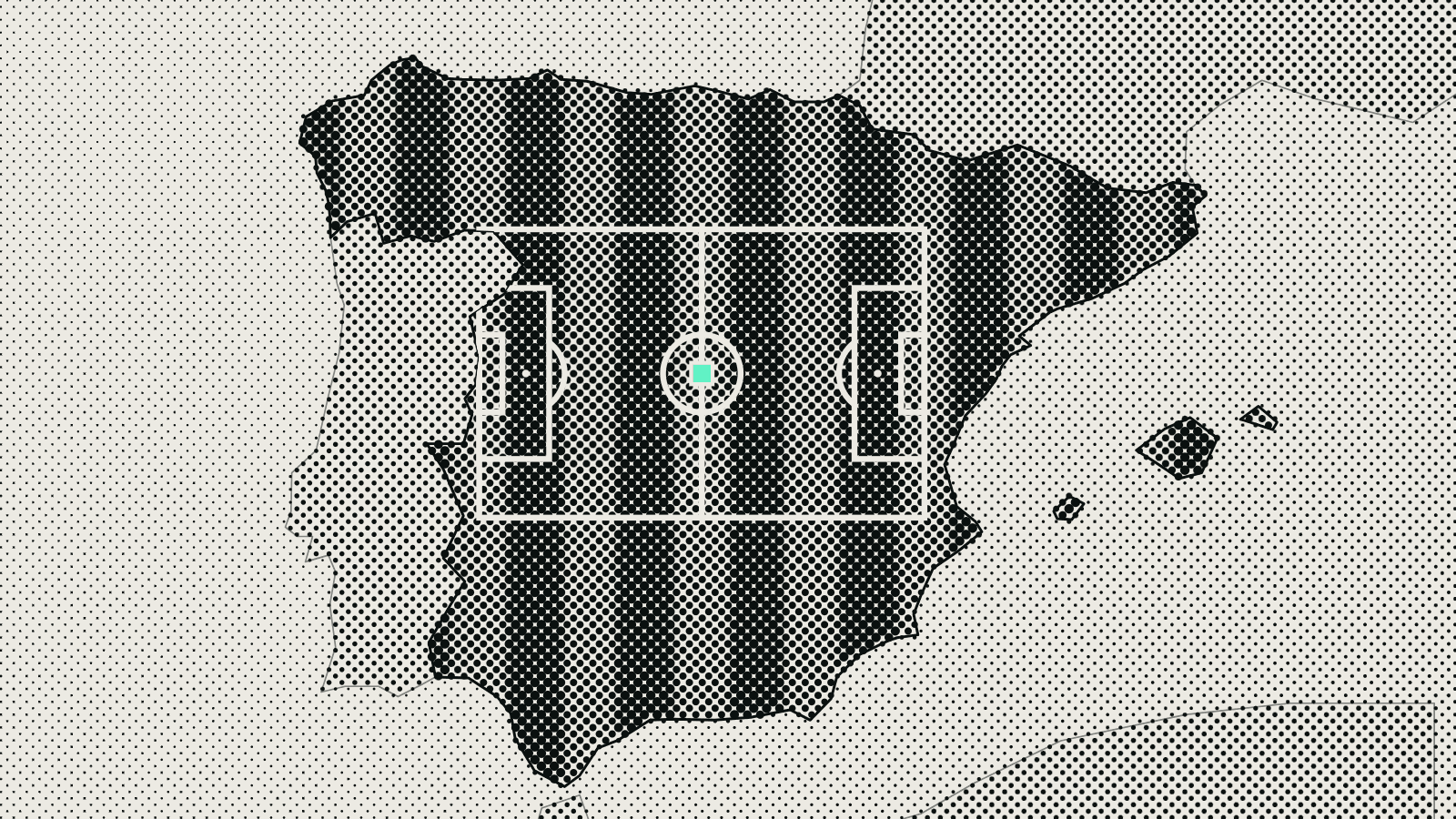
If your site sits behind a large content network, there are evenings when part of Spain cannot open it, and nothing on your side has changed.
What is happening
A ruling of Barcelona’s Commercial Court No. 6 from December 2024 lets LaLiga, the Spanish football league, send internet providers lists of IP addresses to block while matches are broadcast. The target is pirate streams. The trouble is that one address often serves thousands of unrelated sites.
Euronews reported in September that this season’s blocks began on the opening matchday, 15 August 2026, and that between 500 and 1,000 addresses are blocked per match. Among the sites it names as caught in them are the Linux Mint project, a supermarket chain, a payment gateway, and charities such as Unicef and Amnesty International.
How far it reaches
The Open Observatory of Network Interference measured it. It analysed measurements taken on Spanish networks between 1 January and 1 June 2026. Of 9.2 million domains tested, more than 554,000 were blocked at some point during match broadcasts. They sat on 7,441 addresses belonging to 36 hosting providers, and about nine in ten of the affected domains were on Cloudflare. The blocks begin shortly before a match and are lifted shortly after it.
The blocking is not the same everywhere. The report counts 144 hourly windows on Telefónica and 103 on Orange in which more than 400,000 domains were blocked. Other providers blocked fewer addresses, or blocked them in a different way.
In October the Internet Society published a simulator that estimates how many sites go dark when a given address is blocked, and it points to the Spanish case.
Why your monitor did not see it
The observatory compared every result from Spain with a control measurement taken in Frankfurt, and only counted addresses that answered normally there. In other words, the sites were up. A monitor running in a data centre in Germany, or anywhere outside those Spanish networks, showed green all evening.
What to check instead
- Check from inside the country where your users are, not only from where your servers are.
- Check from more than one provider. One home connection on one network is an anecdote. Three on different networks are a finding.
- Keep the times. A failure that begins before kick-off and ends at the final whistle explains itself.
This is the gap Hopbits is built for. Nodes run on home, mobile and datacenter connections, and every answer says which country and which network it came from. A monitor asks three nodes in each country you pick, on different networks, and calls that country failing when two of them fail. Once you have verified that a domain is yours, those checks can run from home connections. The status page shows which countries have nodes today.
Sources
- Collateral Damage of IP-Based Blocking During LALIGA Football Streaming in SpainOONI · 30 June 2026
- In Spain, football matches knock thousands of websites and services offlineEuronews · 18 September 2026
- Simulate the Collateral Damage of IP BlockingInternet Society Pulse · 20 October 2026